
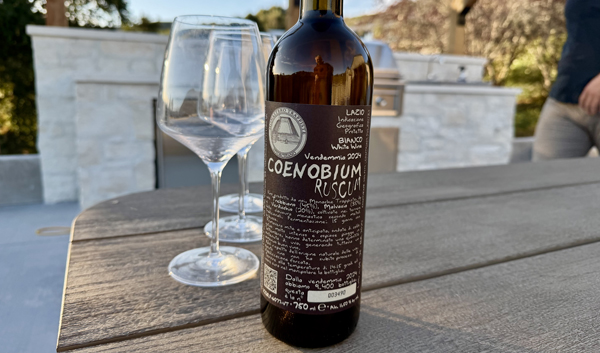
2024 Monastero Suore Cistercensi, Coenobium Ruscum, Bianco, Lazio IGT, Italy.
This unique skin fermented white wine from Italy’s Lazio region is a handcrafted and robust efforts by the nuns of Monastero Trappiste di Vitorchiano with fermentation of 15 days on the skins done naturally with indigenous yeasts. This deeply colored orange wine known as “Coenobium Ruscum” is wonderfully aromatic with dried flowers, grilled herbs, chamomile and apricots leading the way to a bone dry and stony palate with preserved citrus, dried apricot, verbena, bitter almond, mango and salty/smoky wet flint notes. Some rustic tannin and fresh acidity come through on the medium bodied and nicely weighted mouth here, but there’s posed and balanced feel here that is not funky or weird, this is a lovely effort and it goes well with a wide range of cuisine choices, especially artisan cheeses and roast poultry dishes. This vintage saw a mix of 45% Trebbiano, 35% Malvasia and 20% Verdicchio, making for a complex and interesting white skin contact wine that I would not hesitate to recommend. There’s not much in the winery here, basically some stainless tanks, which are mainly used to make these wines, plus some fiberglass vats and some glass carboys for small extra batches. If you are an orange wine fan, you’re going to really want to get this wine, and if you’re a regular wine lover, you will probably be intrigued by this Coenobium Ruscum Lazio Bianco, even with orange wines fading from the spotlight, this one shines brightly.
Made by the nuns of Monastero Trappiste di Vitorchiano, the Monastero Suore Cistercensi Coenobium Ruscum bottling a blend of Trebbiano, Malvasia, and Verdicchio, please note, in some vintages there is a bit of Grechetto, which is the same blend as the regular Coenobium, but seeing close to two weeks of gentle skin contact durning fermentation. The nuns, according to importer Rosenthal Wine Merchant, let the skins do their own thing, resting in the juice until they fall to the bottom, and skimming off the juice at the top as they darken, letting nature decide how long they macerate. The exact amount of skin contact varies year to year with this technique, and this 2024 had 15 days total, which explains the deep amber hue here, a bit darker than I’ve noticed in my prior tastings. The Cistercian nuns have been organically farming their five hectares of vines in Vitorchiano, Lazio, since the early nineties, but it wasn’t until Giampiero Bea of the legendary Paolo Bea winery, of Montefalco Sagrantino fame, from Umbrian began advising them in the early 2000’s that their wines gained a larger audience. There are three wines produced here, this one, plus the no skins Coenobium version, and a Rosso, which is a very rare bottle, made from Sangiovese, Ciliegiolo, Merlot, all are worth chasing down. I’ve been an admirer of these Nuns Wines for some time, and of course a huge fan of the Paolo Bea wines, all of which are for the naturally curious wine drinkers.
($40 Est.) 92 Points, grapelive