
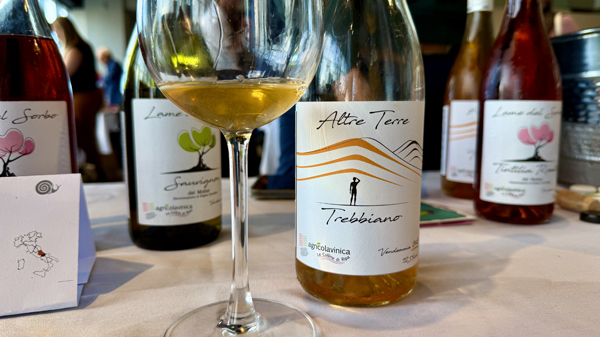
2022 Agricolavinica – Le Colline di Ripa, Trebbiano “Altre Terre” IGT Bianco, Molise, Italy.
It was a pleasure to meet and taste with Dott. Rodolfo Gianserra of Agricolavinica, who is a part of Slow Wine and Raw Wine, who make a lovely set of wines from the Molise area, including this unique skin macerated Trebbiano Alter Terre, along with his early dark Tintilia red. Just just inland from the Adriatic sea on Italy’s eastern coast, and mainly known for their rare mountain olive oil, Agricolavinica has an untamed and organic farm that includes he local cannellino beans, corn and furthermore chickpeas, lentils, tomatoes, seasonal vegetables and apples, as well as grapes, which they make natural wines from, as seen here. The Alter Terre Vineyard Skin Contact Trebbiano has a nicely structured palate and is far removed from some of the funky versions of orange wines that you see, it shines brightly in the glass and is pretty in flavor and aromatic quality with a mix of fresh citrus, dried apricot, Summer melon and mango fruits, along with hints of clove and ginger spice, wet stones, mild herbs and delicate orange blossom. The palate is medium bodied and clean, it lingers well into a long aftertaste and makes for an interesting and compelling wine that goes well with a range of food options, including soft cheeses and or poultry dishes. The young Professor Gianserra says his “Altre Terre” vineyard is located at an altitude of 700 meters above the sea level and it is made up of Trebbiano, Garganega and Pinot Noir grapes. For this wine the Trebbiano (plus some Garganega) is foot trodden in wooden vats where the must ferments naturally on the skins for 7 days before racking to stainless steel to finish fermentation and elevage, that went 24 months before bottling.
I just discovered Agricolavinica, which was established in 2007, as the winery notes, with the aim of developing a full project for organic farming and eco-sustainable development of a territory whereas long time abandoned lands and vineyards with ancient documented histories and were suitable to produce excellent vegetables, fruit and wine. Gianserra Rodolfo says the vineyards are all located at high altitude hills between 550 and 750 meters above the see level. The wide open space(s) between the plants is for a not intensive agriculture and promotes low yield production of the vines here. There is no irrigation besides the natural rain and snow that falls during the winter months and the climate provides a high temperature excursion during the warm seasons and lovely cool breeze, which helps retain a natural acidity. The grass is also kept in the vineyards to maintain nutrients while nature with its vast biodiversity provides, what Rodolfo calls, the perfect background for the grapes to grow and mature. This is further enhanced, he continues, by the varied composition of the soils: limestone, flint stones, clay, marne, sand and calcareous formed over 50 million years ago along the Appennini mountains, that all contribute to distinct terroir character in the wines. The Alter Terre vines are located at the highest point on the farm and this bottling, from calcareous and clay based soils, contains close to 90% Trebbiano and 10% Garganega grapes, all co-fermented, in the finished wine. This delicately amber/orange hued wine, that I tasted at the Slow Wine show in San Francisco, continued to thrill after tasting through the impressive lineup here and I highly recommend it for those that want an exotic, but well crafted skin macerated white wine, though it probably won’t be an easy find.
($25 Est.) 92 Points, grapelive