
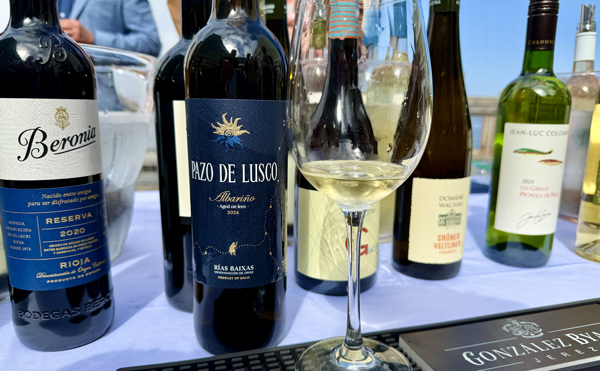
2024 Pazo de Lusco, Albariño, Aged on the Lees, Rias Baixas DO, Galicia, Spain.
Lusco was one of the very first Albariños I ever tried, and I have loved the grape ever since, and this 2024 version is a pure terroir example, with a bit of extra dimension, having been aged on the lees and seeing some good time in used oak casks, making for a delicious mineral toned Summer white with nice structural appeal and compelling dynamic tension on the palate. This medium bodied Pazo de Lusco Albariño leads with salted lime, wet stone and a mix of green apple, tart peach, crisp melon flesh and more limey citrus fruit, along with a subtle rounded yeasty note, almond, white flowers, flint, garden herb and sea shore. This wine gains substance as it warms in the glass, allowing it to be flexible with food options, but it seriously is at its best with a array of shellfish and or grilled sardines, octopus and other white fish dishes. The Adega Pazos de Lusco winery looks to offer the purest expression of Albariño it can from its vines in Condado, which are surrounded by rolling hills and sandy soils, that the winery says are enriched with clay, limestone and granite, that enhances the mineral core and adds a deeper sense of complexity and texture. Lusco blends modern clean winemaking with respect to traditions and heritage here in the Rias Baixas area of Galicia, which may even predate Roman times.
The Adegas Pazos de Lusco Lugar de Grixó winery sits in the Condado do Tea subzone of DO Rías Baixas, where you see richer and more dense expressions of Albariño and the Pazo de Lusco is leaning into that style, as seen here with this lees aged version. The original Pazos de Lusco was founded in 1996, and was one of the first Albariño offerings available in the United States and help create the craze for the grape, and saw such interest that in 2000 the owners of Bierzo winery Dominio de Tares purchased a minority stake in the project, and took over full ownership in 2009. Now the winery is, as of 2016, owned solely by Spanish Sherry giant González Byass, who have invested in many regions in recent years, adding some artisan producers to their lineup. The US bottling differs slightly, but typically the wine is made, obviously from 100% Albariño, coming from mature 30-year-old vines, fermented with indigenous yeasts and then aged on lees in used French oak for 11 to 18 months, followed by 5 months in stainless steel after blending. This latest release wine doesn’t feel flabby or has it lost the salty freshness and vitality you want in this varietal. I was happy to see the quality and soulfulness here at Pazo de Lusco, as we now have so many wonderful choices in Albariño these days. Albariño is maybe the most regal white grape in Spain and historically found in Galicia and in near by Portugal and was coveted by gastronomic enthusiasts along the Atlantic coast of the Iberian Peninsula, but still remains a great value.
($23 Est.) 90 Points, grapelive