
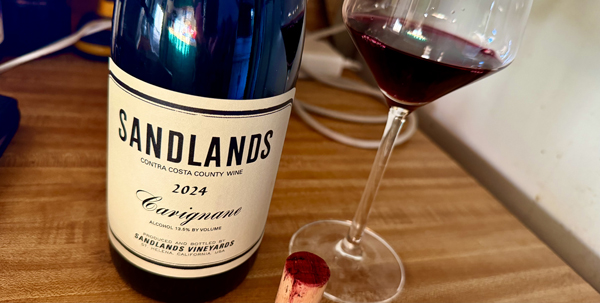
2024 Sandlands Vineyards, Carignane, Contra Costa County, California.
The latest version of Sandlands Vineyards Contra Costa County Carignane, from old historic vines set in the deep sandy soils near the Delta, is saturated purple/garnet and magenta hued in the glass with a rich core of dark berry fruit on the dense, vinous or smoothly generous full bodied palate. Winemaker Tegan Passalaqua always kills it with this wine, it is a long time favorite with again blackberry, blueberry, plum and black cherry fruits, along with background accents that, like in the past, include brambly spices, a touch of earthy loam, sandalwood, delicate florals and licorice, with fine velvety tannin structure and lingering geranium florals. I think to my tastes this vintage, 2024, is fabulously balanced and already drinking beautifully, capturing the year’s and the grape’s best features and character, making wish I had bought a few more bottles! For these Sandlands wines, as mentioned before, winemaker Tegan, who is, as noted before, the vineyard manager and head winemaker at the famous Turley Wine Cellars, uses restraint and employs a light touch in the cellar here with most bottlings being small wines made with indigenous yeasts and lots of whole cluster. Along with an old school maceration(s) with hand punch downs, basket pressing and with the aging being done in well used barrels, mostly French oak. California wine enthusiasts are re-discovering classic areas, Lodi and other region’s historic old vines, like here in Contra Costa County, with many vineyards being well over 100 years old, organically farmed, set on well draining sandy soils, which help show off depth, complexity and opulent richness of fruit, as seen here.
The Carignan grape, as mentioned before, and sometimes spelled Carignane, as seen here, commonly found in blends, is one of the Rhône varietals, but is also found in the wines from Corbieres, Minervois, Fitou, Maury, Saint-Cinian, Pic Saint Loup, and Faugères, in the Languedoc, but can be found in the heritage California vineyards where it usually finds itself with Zinfandel, Petite Sirah and Mourvédre. Carignan is also notable in Spain and Sardinia, where it has a variety of names it goes by. This Sandlands Carignane, from ancient vines set in deep Delphi sand in the Contra Costa region, is crafted with traditional handmade care and sees a minimalist approach in the cellar and aged with used wood to promote fresh detail and transparency. This delicious Contra Costa Carignane and the Lodi version are great examples of this varietal, which can be similar to Zinfandel, though darker in profile and with some good underlying tannic structure, while retaining a fresh underlying acidity, even in warmer climates. As I’ve said here before, the Sandlands line-up encompasses these forgotten classic California varieties, like Carignane, primarily grown in decomposed granite (sand), as seen here, from regions and vineyards that have been farmed, as Passalaqua notes, for many generations but have remained the outliers of California viticulture. Coming from primarily head-trained, dry-farmed and own rooted 100 year old plus vines, these wines, which are outstanding values, as Tegan continues, that harken back to California’s roots of exploration, wonder, and hard work. The Sandlands offerings, are best grabbed off the mailing list, and released typically a couple times a year, they are limited, hand crafted wines that I wholeheartedly recommend, especially the Carignane bottlings.
($28 Est.) 93 Points, grapelive