
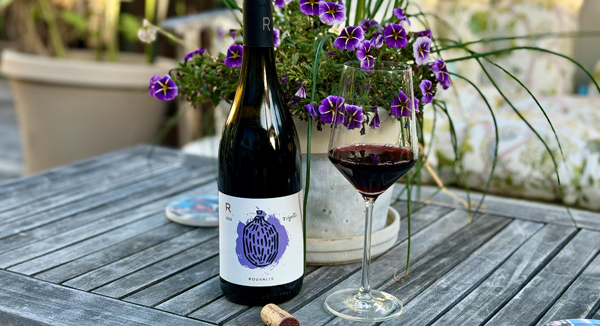
2023 Rouvalis, Tsigello, Slopes of Aigialeia, Greece.
Coming from a small area of the Peloponnese, the Aigialeia region, is this lovely and distinctive amphora raised red wine wine from Rouvalis made from an ancient native grape Tsigello, which I don’t remember having before, making for a tasty curiosity in the glass. While I was visiting Minneapolis earlier this year I found my way to Violet Wine and Spirits Shop and was turned on to this unique wine, and I brought a bottle home to California. This dark garnet/ruby colored Tsigello saw a gentle de-stemming and crushing with a cool 10 day maceration and fermentation, then was gravity flow pressed to handmade local clay amphora to age, lasting about 6 months. The medium/full palate is fresh with black raspberry, wild plum, tangy cherry and strawberry fruits, along with a touch of leafy herbal notes, minty eucalyptus, wilted flowers, snappy spice, orange peel and hints of gravelly earthy loam. The vines here, at elevation especially above 500 meters, are protected from high summer temperatures by the refreshing breeze that comes from the nearby Corinthian Gulf and allows for the elegant balance and structure seen in this Rouvalis Tsigello, which is sourced at about 600 meters up. I recommend both, Violet Wines in Minneapolis, and this quality Rouvalis Tsigello wine, which is a pretty good value too.
Aigialeia Greece is, as described by travel guides, a Peloponnese Wine paradise with a quintessentially Greek landscape of vineyards and olive trees that dates back to ancient times and filled with almost unheard of indigenous grape varietals, including Tsigello, seen in this wine. Aigialeia Greece is a subregion of the Achaia or Achaea region or regional unit in the northwestern part of the Peloponnese peninsula and has dramatic hillsides, an unspoiled natural feel and is home to seven rivers, six tall mountains, traditional villages, with spectacular scenery in every direction. Aigialeia has been known for centuries for having ideal conditions for winemaking, but interestingly most of the grapes found here, about 80%, are used for raisins and until modern revival, most of the wines were sweeter wines, or crisp whites, though now the upper hills are producing seriously delicious dry red wines. Back to the Rouvalis Tsigello, also known as Mavrodaphne, this wine really grew on me over the course of the evening and its authentic purity shined, as well as the soft tannic backbone that made it go well with food and drink nicely on its own. It reminded me in ways to a Loire Cabernet Franc meets a Bierzo Mencia, with its raw character and natural style. This was very fun and a wine I would like to have many times again in the future, and gives me a renewed inspiration to visit Greece, if I needed an extra push!
($30 Est.) 92 Points, grapelive