
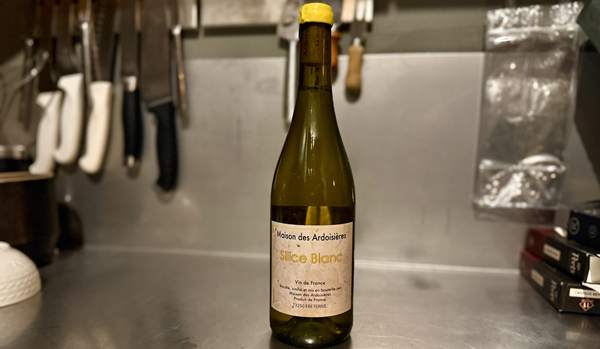
2025 La Maison des Ardoisières “Silice” Blanc, Vin des Allobroges IGP, Savoie, France.
I hadn’t had a pure Jacquère in a while, so it was great to catch up in this lighter/fresher varietal in its purest form and most notable modern producer, Maison des Ardoisières, and I was not disappointed. The steely crisp natural detail and low alpine alcohol really hit the spot, with its racy palate giving bright citrus, earthy muskmelon, tree picked peach and a hint of apple fruit, along with wet stone, sour grass/herbs and almond. This brilliant, ultra pale and vibrantly focused wine is sourced from 25-year-old Jacquère vines on steep schist and calcareous clay soils in mainly the d’Apremont (sous le Mont Granier) and à Cevins et Saint-Pierre-de-Soucy, in the mountainous Savoie Alpine region of France, close to the Swiss border. The La Maison des Ardoisières “Silice” Blanc is a natural wine that is farmed all biodynamically that captures the soulful expression of this unique terroir. The Alpine, high-altitude freshness, firm acidity, and stony minerality make La Maison des Ardoisières a benchmark for modern Savoie whites, and lead a geeky cool revival in the region that has been largely forgotten in the last 5 to 10 years. The Ardoise name means slate, and the name tells you, the winery notes, what’s underfoot he in the Coteau de Cevins area of the Savoie, while there is a rich geological array up here, that also includes the mentioned schist, quartz, red Améthyste and outcroppings of ancient limestone. Imported by Martine’s Wines for California the La Maison des Ardoisières has become the main go-to Savoie winery for enthusiasts and the wines are now staples at some of the state’s best restaurants.
The (La) Maison des Ardoisières estate is run and managed by winemaker Brice Omont, The Coteau de Cevins, a steep slope in the valley leading up to Albertville, once grew vines, but they disappeared and the hill lay abandoned. In the late 1990s the local mayor, Denis Perroux, set out to replant it with Michel Grisard, a pioneer of biodynamic farming in Savoie, and the domaine was born in 1998. Brice Omont, a Champagne native, joined in 2005 and now runs the estate. The terraced Cevins vines, on slopes of up to 60%, grow in old mica schist, loam and sand. Since 2008 the domaine has also farmed clay-limestone and schist at Saint-Pierre-de-Soucy,Grape Variety: 100% Jacquère (an iconic alpine grape). Terroir and Soils: Soils rich in silica, shale, clay, and limestone scree, primarily located near Apremont (below Mount Granier), Cevins, and Saint-Pierre-de-Soucy. Viticulture and Winemaking: Organic and biodynamic farming, manual harvesting, fermentation using indigenous yeasts, and minimalist aging in tanks or old barrels with little to no added sulfur. While the whites here are made from Jacquère, as seen here, and Altesse, the reds are made from Persan, an old native, but lesser known varietal and the more famous Mondeuse or Mondeuse Noire grape, which is believed to be related to Syrah, with DNA testing saying it is either a grandparent or half-sibling to Syrah. Interestingly in California the Mondeuse grape has been here a while, but at certain points has been thought to have been a weird Pinot Noir clone and or Refosco, a rare northeast Italian grape of no relation! La Maison des Ardoisières is really worth checking out and I highly recommend getting to know the wines of the Savoie region.
($29 Est.) 90 Points, grapelive