
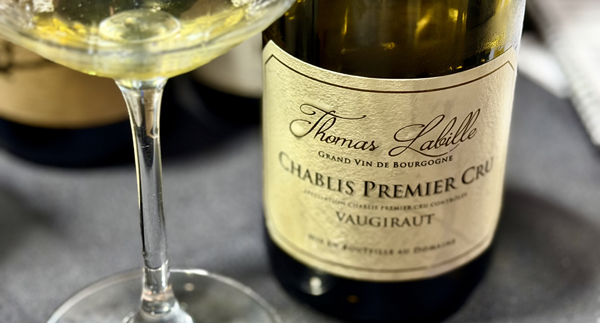
2020 Domaine Thomas Labille, Chablis 1er Cru “Vaugiraut” White Burgundy, France.
I got to taste the distinctive golden hued Thomas Labille 2020 Vaugiraut 1er Cru Chablis, a Cru I had not had before, which was beautifully dimensioned and impressive on the concentrated palate with lovely lemon curd, green apple, zesty lime and Asian pear fruit layers, along with oyster shell, saline, leesy brioche, hazelnut, wet flint and clove spice. The 1er cru Vaugiraut, is set on south-west facing slopes on the left bank of the Serein River, but like the Crus on the right bank, benefits from its southwestern exposure seeing the late aafternoon sun, plus the classic limestone and clay soil and it is a sub-zone of the Vosgros Premier Cru vineyard. Labille, as it is noted by their US importer Massanois has some 35 hectares in the Petit Chablis, with its more clay based soils, Chablis and Chablis 1er Cru appellations, with most of those being hillside parcels set on the more classic limestone soils, perfect for making some authentic terroir driven efforts. Etienne Boileau, Massanois adds, created the Domaine du Chardonnay in 1987 with his two associates, William Nahan and Christian Simon and together, they helped built the strong Domaine that it is today, run by Nahan’s son Arnaud Nahan and Thomas Labille, who the Domaine is now named for. I really liked this wine and I recommend for those looking for a unique white Burgundy, and one that is hitting its stride right now.
As mentioned in my prior reviews, the Thomas Labille estate, founded in the later part of the 1980s, which was all new to me last year, crafts some delicious Chablis and Petit Chablis wines, and is known for their crisp purity, mineral character, and vibrant crisp acidity. The domaine, fast becoming a favorite, joining Savary, Christophe and Costal for quality and value, I understand, practices all sustainable and organic farming on their collection of small parcels. The focus is on wines that express the distinctive Chablis terroir, and particularly its chalky Kimmeridgian soil, and that reflects in the wines, resulting in a minerally, citrus-driven and, non overly oaky, but partially barrel fermented style. For the Labille Chablis, the winery typically does a whole cluster press and a short settlement period before the wine is racked to barrel for spontaneous fermentation, after which the wine continues to mature in the used barrels for between 15 to 18 months with very little disruption of the lees, depending on the vintage. The vintage 2020 displays lots of ripe density of fruit, but still has good balance and elegance, as seen here, but maybe some purists will bemoan the richness found in Chablis offerings on the year. The changing climate and hyper weather events are playing havoc with this classic region, but passionate and hardworking producers are fighting to make the wines the best they can, and I would say this one is an example of that. Another thing I will mention is that Labille hasn’t been truly discovered yet and in the States they are still reasonably priced!
($45 Est.) 93 Points, grapelive