
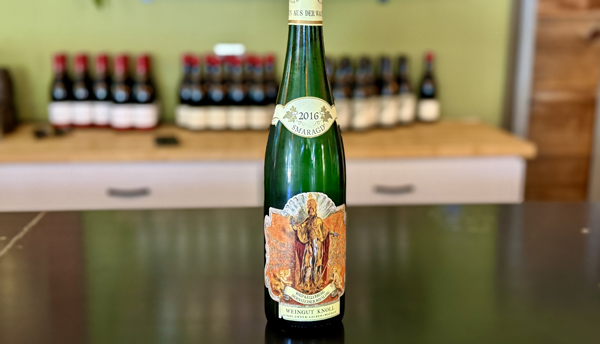
2016 Weingut Emmerich Knoll, Riesling Smaragd, Reid Kellerberg Dürnsteiner, Wachau DAC, Austria.
Yes, there’s decades left to go here, but oh my what a profound wine and stunning in chiseled detail, depth and pleasure, this Knoll Reid Kellerberg Dürnsteiner Smaragd, a rare bottling, is rich on the palate and just beginning to evolve in all those happy Riesling ways, with terroir signatures and highlighting one of Austria’s best ever vintages in my lifetime. A huge thank you again, to owner of Big Tar Wines and Joyce assistant winemaker Aaron Watty, who gifted me this bottle to share with friend’s at our annual Sea Food Broil, where it was just gorgeous with fresh Maine lobster. The Knoll 2016 Smaragd is now a lovely golden hue in the glass, with subtle petrol, apricot rosewater, apple butter, honeycomb and flinty mineral aromatics leading the way on to the viscous palate where you get, an opulent feel rather than sweet sensation, with more apricot (fleshy), baked apple, lemon/lime, citrusy and oily, quince, muskmelon and delicate lychee, along with bitter almond, steely liquid rock, a touch of verbena, spice, orange/herb tea, clove and crystalized ginger. Wonderfully integrated, poised and hypnotic, as these magnificent Knoll wines can be, there’s so much going on, but without confusion, and it truly speaks to Riesling freaks, like me, this is close to perfection and will only get better ad getter in the years ahead. As noted in prior Austrian write ups, the Dürnstein Vineyard, a stellar Cru site, with its many singular parcels, is set on a combination of clay mixed with gneiss, mica schist, loam and sandy gravelly soils, all of which adds to the depth of complexity here and the cool climate allows for greater retainment of zesty acidity. The Knoll’s are internationally famous, and these wines can be incredibly hard to find, you’ll need to search them out and I highly recommend the full range of offerings here, but of course I suggest you explore the drier whites, led by the lighter style Federspiel Grüner Veltliner, a big favorite of mine with its crisp and bright character, but these richer Smaragd bottlings, like this fantastic Ried Kellerberg Dürnsteiner, are the serious ones to cellar.
The famous Wachau based Weingut Knoll is run by the legendary Emmerich Knoll, his wife Monika and his son’s Emmerich jr and August, one of Austria’s great producers, is cherished by Grüner Veltliner and Riesling enthusiasts around the world, making some of the most sought after wines in Europe. As well documented, generations of the Knoll family have dedicated their lives to growing grapes here in the Wachau, just off the Danube River and west of the Capital of Vienna, with the first bottles ever filled with Knoll wine in post WW!!, in the 1950s. The, again as noted, arguably most famous wine label in Austria and the the family’s trademark baroque image of Saint Urban first graced these Knoll wine bottles back in 1962, a year before I was born. The Knoll’s estate has just sixteen hectares of vines, mostly on steep slopes, and the names of these terraced plots have become almost sacred amongst true enthusiast wine drinkers. Names like the Kellerberg, Loibenberg, Pfaffenberg and especially the Schtt, which is the main fruit source for the iconic famous range of Knoll Rieslings and Grüner Veltliners, hold a special place among the great vineyards of the world, largely thanks to Knoll!. It’s said that the Riesling vines at Kellerberg, with its south-southeast aspect, benefits from being shaded in the afternoon by the neighboring Höhereck site and that adds to the wonderful tension here, which Knoll has captured in this Smaragd, which is broad shouldered, a riper and fuller bodied style dry example (of Austrian Riesling, like a GG.) with 13% natural alcohol. For the Smaragd, Knoll, who practices sustainable and traditional winemaking, hand harvested a careful selection of the clusters, pressed them with stems and then cold settled the juice. It then was fermented in a combination of old oak casks and stainless steel vat for 10-20 days, when the must went completely dry and then it was aged 6-8 months on the lees before being racked for bottling with a light filtration. It’s hard to put into words, even though I tried here, just how freaking good these Knoll wines are, so please put them on your bucket list, especially in awesome years like this one!
($100 Est.) 98 Points, grapelive